
Have you found yourself in your kitchen, holding a knife in one hand, trying to decide if you’re using your chopping board in your best interest or unknowingly poisoning your meals? Then, this is just the article for you. The type of chopping board that you choose can make a significant difference in terms of cleanliness, food safety, and even the overall flavor of the meal itself.
We will take a look at each board separately, in an attempt to explain which material should be chosen by which cooks.
Starting off with plastic chopping boards, it is important to note that they are extremely common in modern kitchens due to their low price and easy maintenance. It would be natural to assume that such chopping boards can be considered the safest, as they can be washed or even placed into a dishwasher. However, after some time spent using such boards, your knife will start cutting out little scratches and grooves on their surfaces. Such scratches create the ideal place for harmful bacteria to reside.
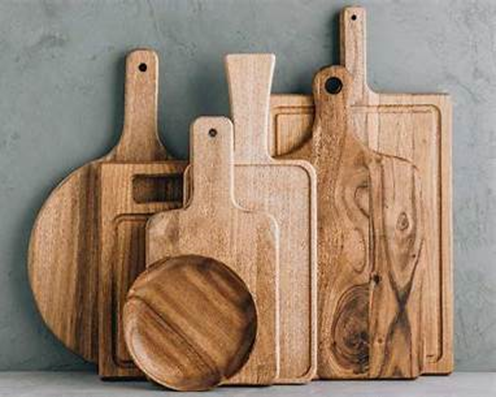
Now comes the wooden chopping boards. Traditional materials, such as wood, are a top choice because they are durable. However, it is widely believed that the porous nature of wood allows moisture to penetrate, creating favorable conditions for bacterial growth. On the contrary, scientific and practical evidence prove something else. The high-quality wooden board is characterized by antibacterial properties; indeed, it kills microorganisms and does not allow them to reproduce. Moreover, the surface of a high-quality wooden chopping board is self-healing; knife cuts dry out quickly, reducing possible bacterial reservoirs. Another advantage of wood boards is their gentle impact on knife edges.
The next type is a bamboo cutting board, which has recently become very popular due to its unique properties. It should be said that bamboo is a plant species rather than wood, but its characteristics are quite similar to wood. This product is more environmentally friendly, affordable, and grows faster than wood. The material is harder than wood; therefore, knife impacts do not go deep into the material, which promotes its hygienic properties. Hardness is a double-edged sword since it affects the longevity of knives adversely.
Which of the chopping boards will be the safest?
To tell the truth, if you seek an honest answer, then a well-maintained wooden chopping board would be the best and safest option. It would last longer, remain naturally hygienic and not blunt the blades as fast. Bamboo is the runner-up – eco-friendly and cheap. The plastic one could be a good choice, but you will have to change it more frequently for it to be actually safe.
But the bottom line here is that there is no such thing as an absolutely safe board. It is important to maintain hygiene and clean the board after each use. Let it air dry and use different boards for fruits and vegetables and another one for meat.
It goes without saying that the right choice of a chopping board is extremely important. It is not only a piece of kitchen equipment. This is what your meals begin with. Choose wisely.
Now, when you have a proper board, feel free to chop your vegetables with pleasure!